
Death, Immortality, and the Art of Laughing at the End
Comedy

Kendog
Stories about death tend to carry a certain gravity, the kind that pulls you downward. Loss, separation, the fact that everything ends. These forces have a way of steering a story toward solemnity.
But there's a strand of Japanese manga that uses that same gravity in reverse. Death, immortality, the end of the world: all heavy material repurposed as fuel for comedy. The appeal of these books lives in how lightly they carry it.
The three titles here each find their humor through a different theme and approach: a pair of brothers who can't die, a vampire who dies constantly, and a salaryman who gets his life back thanks to the apocalypse. What they share is a strange afterglow. You tend to come away from all of them feeling oddly refreshed.
1. Millennium Family — Eternal Life and Its Endless Errands
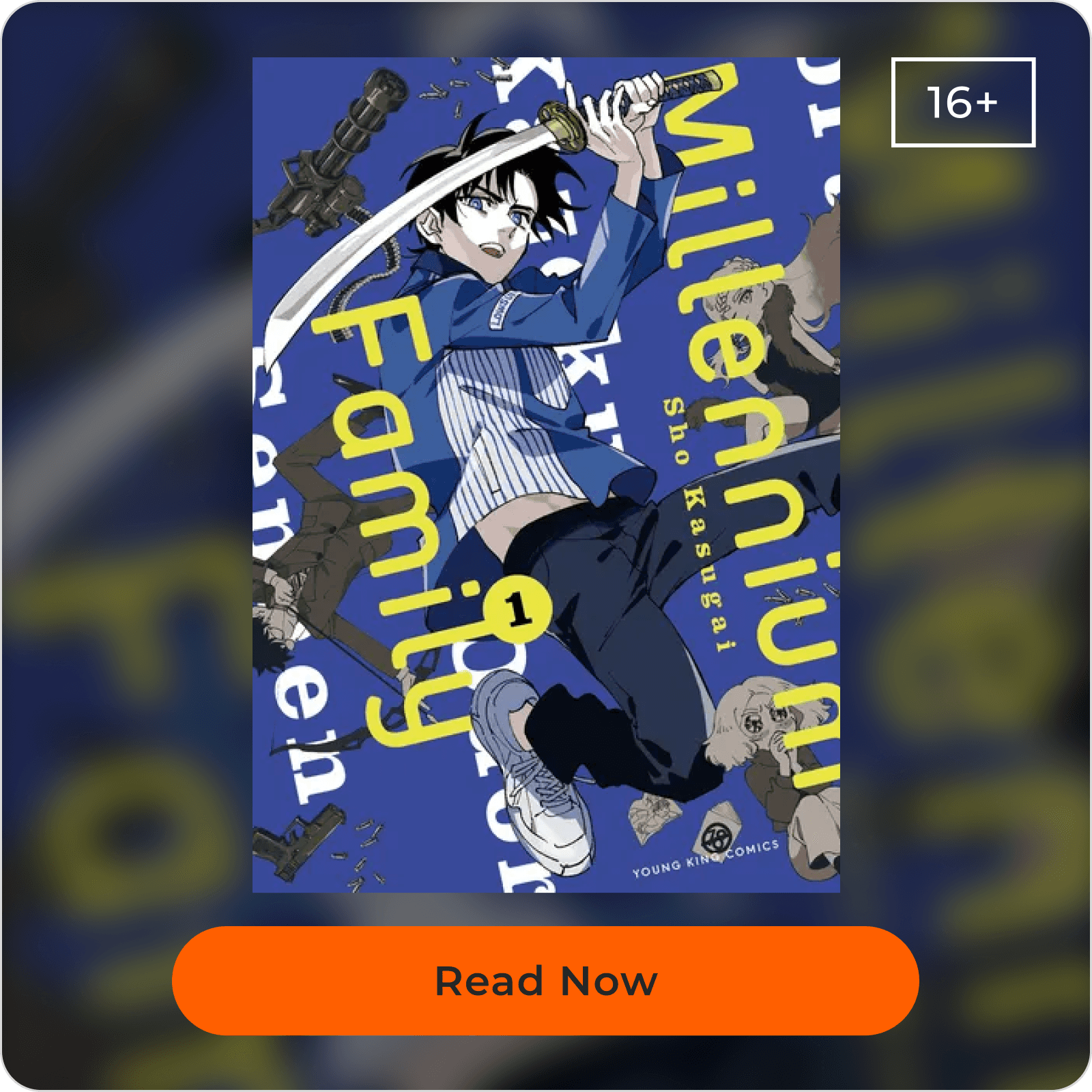
Immortality has long been filed under "serious themes" in fiction. The loneliness of outliving everyone you love; the dissonance of staying the same while the world keeps changing. The solemn immortal usually comes equipped with sad eyes.
The siblings at the center of Millennium Family don't quite belong to that lineage. They've been alive for centuries, but they process that time less as tragedy than as a daily routine that simply went on too long. Blended into modern life, they pick up convenience-store shifts and fear missing Comiket more than they fear death.
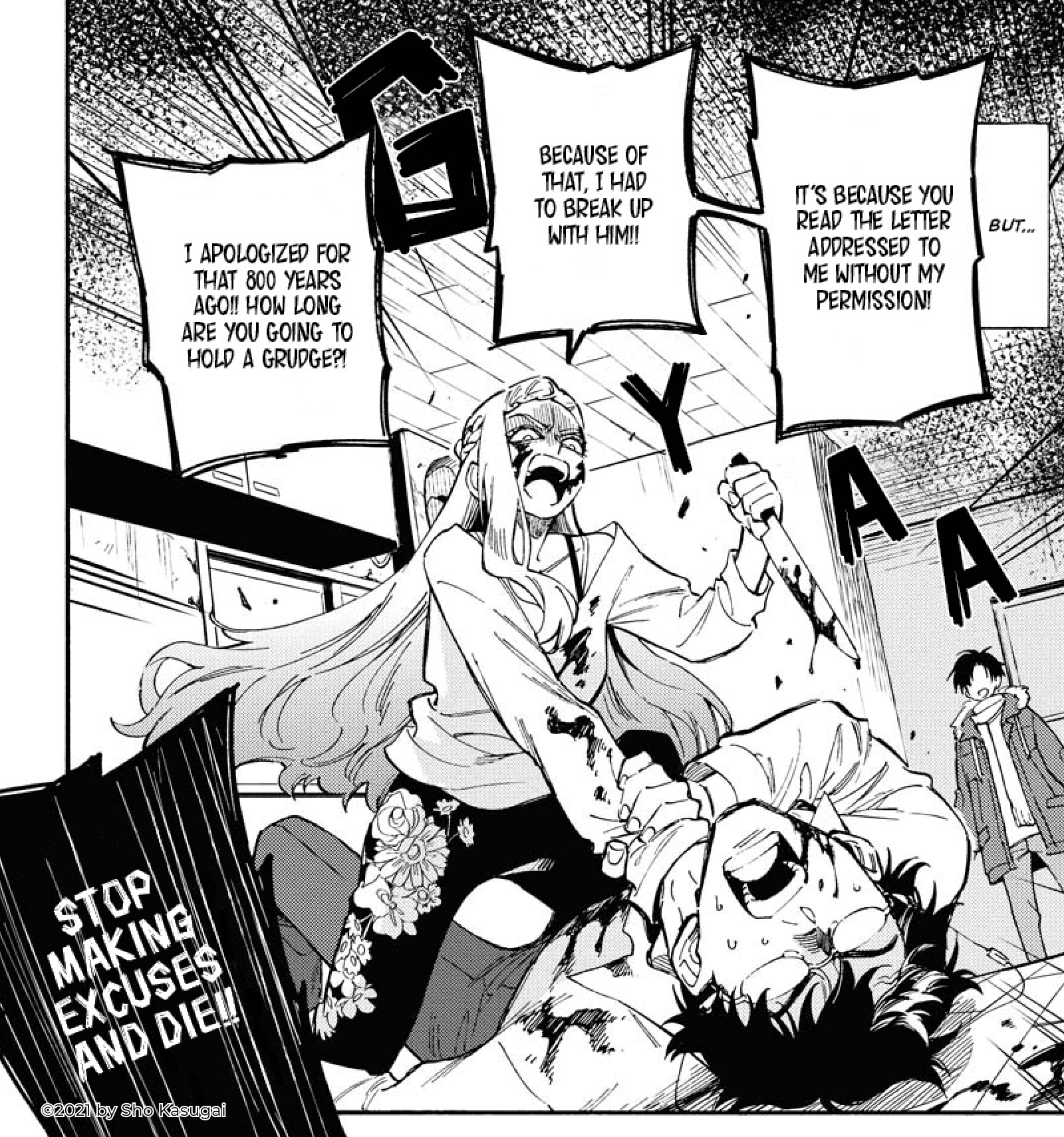
Here, immortality functions as a cheat code and a curse at once. From the criminal underworld to corrupt hospitals, the siblings spend their days fleeing pursuers who want their deathless bodies, and because they can't die, they can never quite get away. Turning the real problem of immortality ("the hassles never stop") into a slapstick action-comedy is where author Sho Kasugai's craft shows.
One thing worth knowing going in: because no one can die, the gore isn't exactly restrained. The thing is, the panels move on before the weight can land. An arm gets torn off, the whole body chars black, and by the next panel the plot has already advanced. The speed leaves no room for pain to linger, which is what carries images you'd normally flinch at over into the territory of slapstick.
2. The Vampire Dies in No Time — When a Ridiculous Death Becomes the Punchline
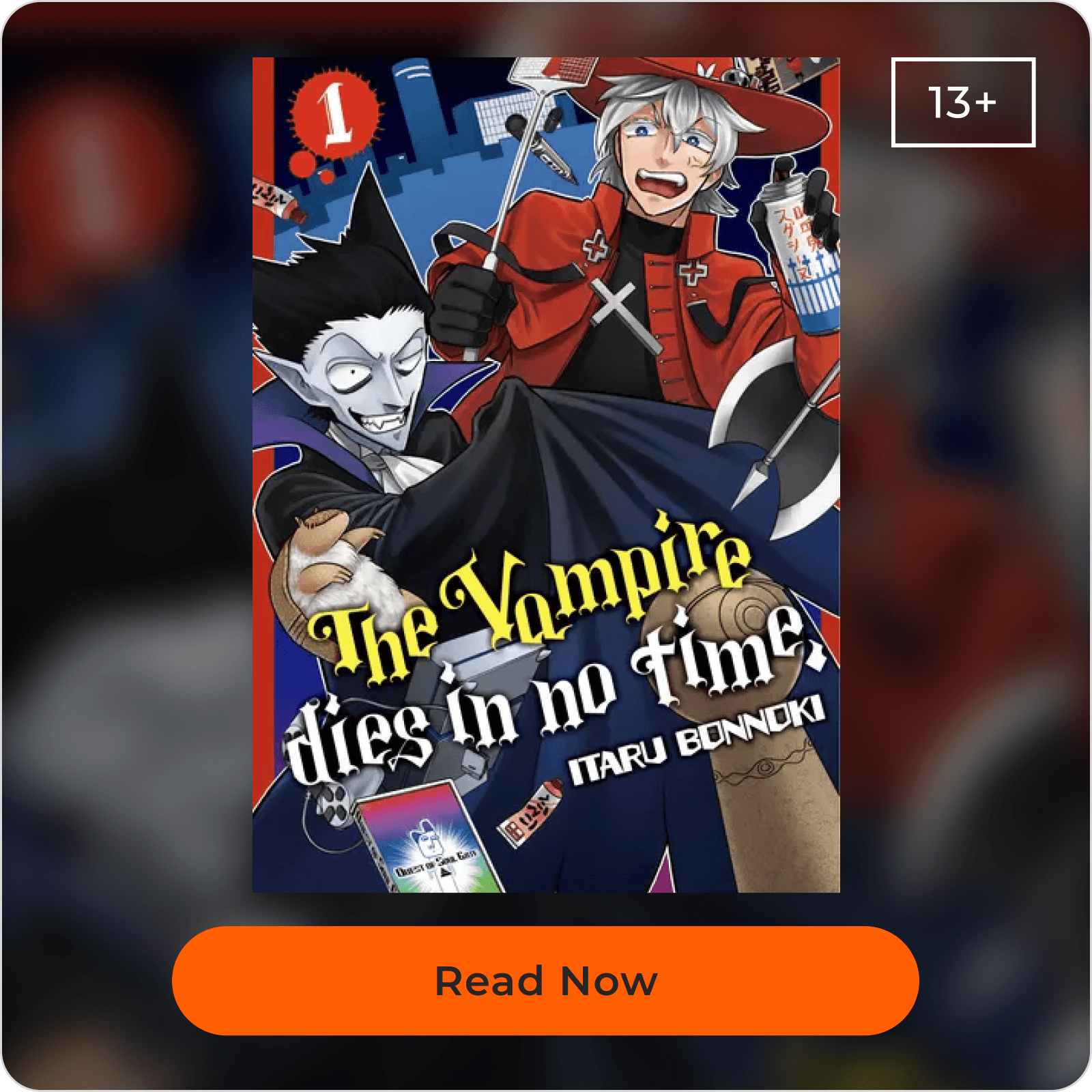
Vampires usually come bundled with two traits: power, and not dying. Draluc keeps only one of them, and not the useful one. He can't die. He's just extremely fragile.
His causes of death are absurdly trivial. He dies from getting startled. He dies from a mosquito bite. A mild shock turns him to dust. And after a while, the dust reassembles. In a book where death is treated as a punchline rather than a departure, Draluc dies every few pages, much like Tom in Tom and Jerry, springing back from each absurd demise as though nothing happened.
Part of the comic engine comes from grounding a vampire-hunting fantasy in the streets of present-day Japan. The contrast between smartphone-toting moderns and an old-fashioned vampire like Draluc generates a steady stream of deadpan, sitcom-adjacent gags. (Picture a vampire crushed to death by the automatic doors at a convenience store, and you have the general idea.)
It isn't all goofing around, though. After a long volley of nonsense, a genuinely serious episode will occasionally slip in, almost as an ambush. That control of tempo, knowing when to ease off, is part of why a gag manga like this keeps holding the reader's attention.
3. Zom 100: Bucket List of the Dead — The Apocalypse as a Reset Button
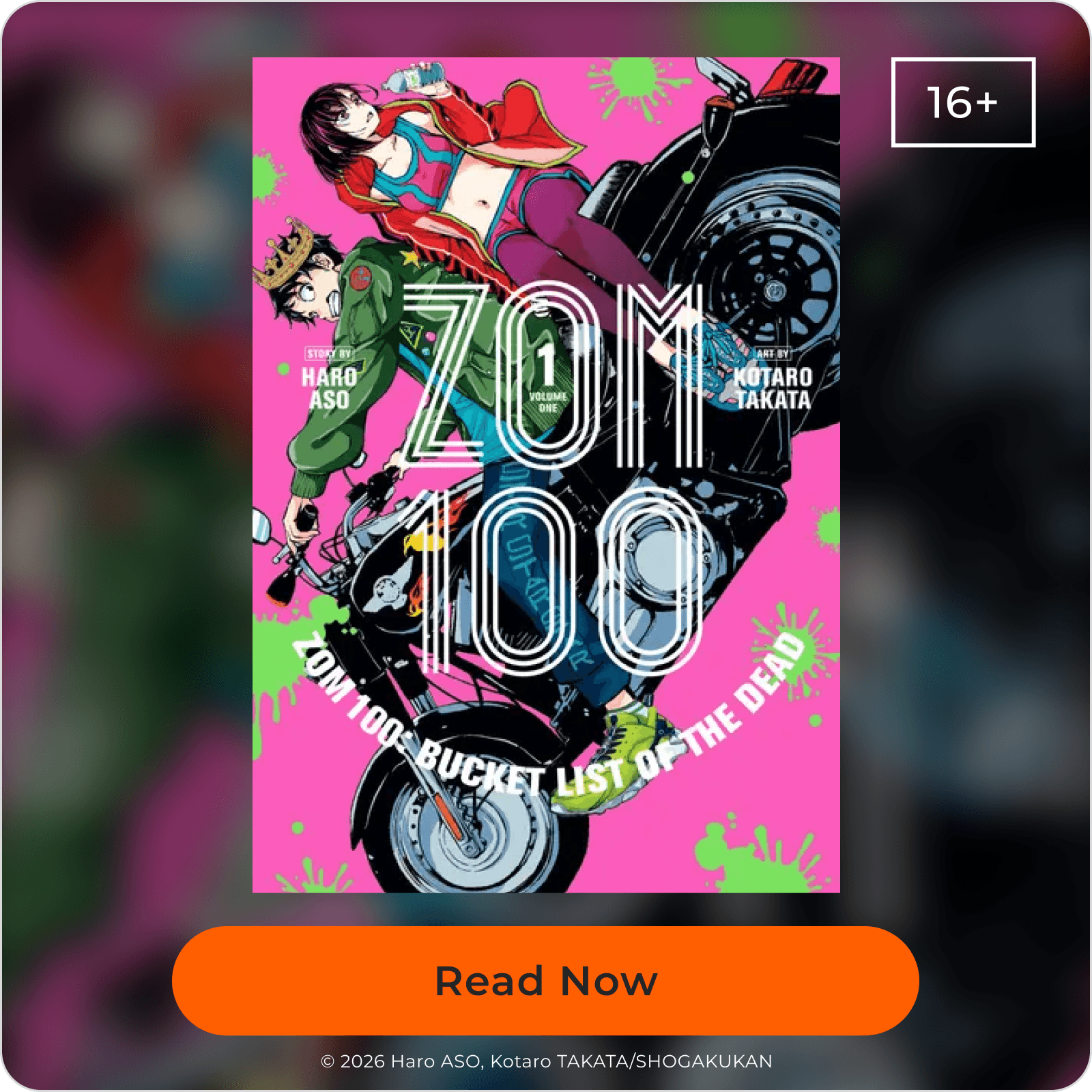
A zombie apocalypse is usually framed as the worst day of your life. Infrastructure collapses, order disappears, people stop being able to trust one another. The texture The Walking Dead built was exactly that kind of despair.
The protagonist of Zom 100: Bucket List of the Dead greets that same morning as the best day of his life. The reason is simple: he'd been living a life of being ground down by an exploitative company. The world ended, so he doesn't have to go to work. The apocalypse, ironically, functions as liberation.
What makes the book interesting is that it keeps the end-times atmosphere of the genre fully intact while inverting only the hero's interior state. The city is in ruins; the zombies are genuinely frightening. And yet he moves through it all energized, bucket list in hand. The end of the world in the background and his upbeat foreground never quite line up, and that gap in temperature produces both the comedy and the momentum.
The irony of a life that only begins once the world ends may feel closer to home than expected for anyone who's been through real overwork.
A Reading Experience That's Light on Its Feet
Millennium Family, where tempo outruns heavy emotion; The Vampire Dies in No Time, which turns death into a punchline; Zom 100, which smuggles a different feeling into a world of despair. For readers carrying the weight of the real world, books that sidestep "seriousness" this lightly can serve as a modest place to step away for a while.
However many times the world ends, breakfast the next morning still tastes good. Something close to that almost stubborn optimism might be what you're left holding by the time you turn the final page.