

Great Manga Are Always Women's Manga: Staff Soul Picks by Kendog

Kendog
The renowned Japanese film critic Shigehiko Hasumi once argued that the finest works of Japanese cinema belong to a lineage of "women's films." By "women's films," he didn't mean films made for women, or films directed by women. It's a highly particular concept: works in which "the body, desire, and gaze of a woman set the film itself in motion, entirely outside the bounds of male desire."
As a former literary scholar, I found myself drawn to this idea of Hasumi's, and ever since, I've read manga the same way—always on the lookout for "the moment a woman springs to life as the driving force of the story." In other words, I follow stories searching for a narrative that is "of women, by women, for women" lurking somewhere within.
Here, I'll present a lineup of the finest "women's manga" that have struck a chord with me as a male reader—everything from girl-meets-girl romances to tales of the "losing heroine" who anxiously watches over a male protagonist ensnared by a femme fatale.
My Romance Bible, and the Greatest Coming-of-Age Manga
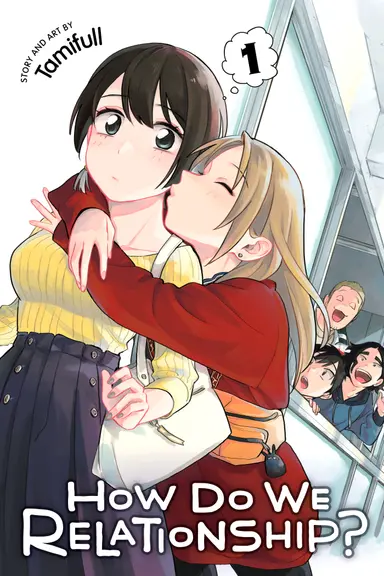
Given how drawn I am to manga that make women the drivers of their stories, my falling for yuri manga was, at this point, simply the natural course of things. And among them, How Do We Relationship? brings back, more vividly than anything else, that feeling I knew back in my own university days—living each day carefree and easy, yet with no settled sense of how to face myself, others, or the world, my roots wobbling beneath me.
Miwa and Saeko meet in a music club and start dating on a whim. Their relationship swings ceaselessly back and forth, like a shuttle run between "butterflies" and "quagmire," laying bare one after another the sheer helplessness of love—mismatched desires, jealousy, self-loathing.
At times the two are so hopelessly clumsy that you may find yourself exasperated, thinking, "Come on, get it together already!" And yet, as each of them—hurt by a partner's rejection, bewildered by their own desires—slowly comes to grips with the question of "what do I really want," you'll find you can't look away.
Transcending the very genre of yuri, this is a soul-poured work by Tamifull, one that spent seven years fully depicting two women living out their own lives through love. The butterflies, the quagmire, the failures, and the growth that lies beyond them—please see this couple's love through to the very end.
A Shocking Work from an Artist Who Keeps Depicting Women

You can't talk about "women's manga" without touching on the work of Akane Torikai.
Throughout her career, Torikai has depicted the strange bonds between women—who at times clash, at times reach out a hand to one another. Among these, Sensei’s Pious Lie is a particularly provocative work, one that violently portrays the divide between men and women—and further, the divide lying within relationships between women themselves—through a story of tangled, murky psychodrama.
Its central provocation is clear from the very opening sequence, which mercilessly hurls before the reader the proposition that every single human relationship in this world is built on an unequal balance of power.
It's by no means a work that will leave your heart feeling refreshed, but as the darkness the characters can't bring themselves to reveal is exposed, bit by bit, you may find yourself seized by a twisted sort of thrill.
A Pick for the Advanced Yuri Reader
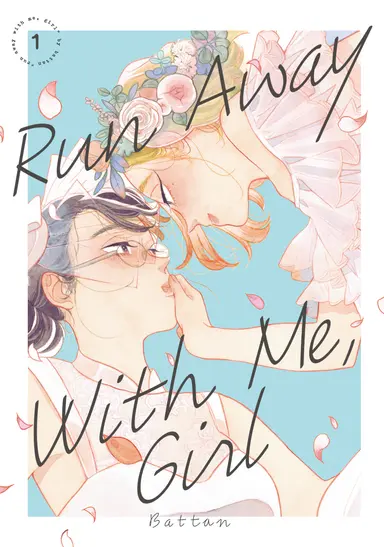
Some may hear "yuri manga" and picture nothing but pure, aesthetically dreamy depictions of love—but that's hardly the case when the person you long for happens to have a husband.
Our protagonist, Momo, can't forget Midori, the girl she dated back in her all-girls-school days. A chance reunion between the two sets Momo's world sparkling once more—except Midori is pregnant with the child of an emotionally abusive man...
As the title (Run Away With Me, Girl) suggests, can the two escape the circumstances surrounding them—and if they do, will happiness await them on the other side? A masterpiece that renders this rather heavy story with a light, adorable art style.
The Worst Aftertaste You’ll Ever Dream Of
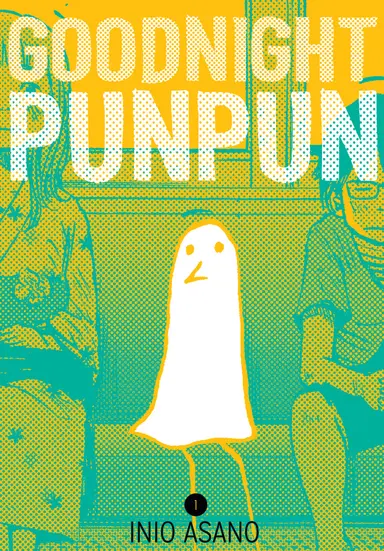
Inio Asano's Goodnight Punpun is a coming-of-age ensemble drama centered on the growth and ruin of a boy named Punpun. What drives Punpun's story is Aiko, a girl he's adored since childhood. To Punpun, she is an object of longing, a salvation, and at times a femme fatale who throws his very life off course.
But what kind of life does Aiko lead, what does she want, and why does she act as she does? The full picture doesn't reveal itself to the reader until quite late in the story. Until then, her figure and her motives are almost entirely visible only through the filter of Punpun's desire.
And here's what I personally want you to pay attention to: Hana Nanjo, a crucial female character who, even as she's bewildered by Punpun's follies, keeps standing by his side. In the shadow of Aiko's overwhelming presence, she too is living a story all her own, carrying her own desires around love and creation. To call her a "losing heroine" feels far too glib for a life this raw and earnest—please give her attention as you read.
What If, Again and Again
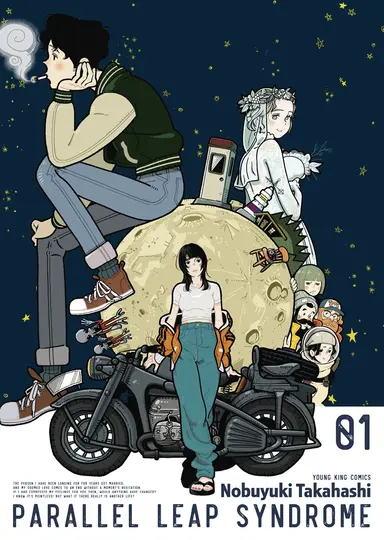
A work that depicts the "what if" world everyone imagines at least once, in a tone that's romantic, surreal, and just a touch philosophical. And believe it or not, the English version is now available only on emaqi!
The skillfully crafted story structure is impressive in its own right, but what first catches the eye is the pop, adorable art style of the author, who is also an illustrator. Just watching the outfits of the protagonist and the heroine Haruko swap with each move to a different timeline should be enough to satisfy any fashion lover.
Personally, I find myself charmed by the devoted characterization of the protagonist's childhood friend, Satoimo—if there were ever an award for "Best Childhood Friend in Manga," I'd hand it to her without a moment's hesitation...!!
One Last Thing, Just Briefly
The medium of manga holds infinite blank space—between page and page, between panel and panel, between speech bubble and speech bubble. Perhaps the way I find myself imagining side stories from a female character's point of view, as if reading between the lines of the dialogue, is itself one of the pleasures born from that blank space so unique to manga.
As a guideline for reading that blank space, what I've taken the liberty of borrowing is Shigehiko Hasumi's theory of the "women's film." Applying it to manga, it seems, turned out to be a far deeper rabbit hole than I'd expected. There are still plenty of works I couldn't fit in this time, so if the chance arises, I hope to bring you a second installment.
About the Author
kendog

41 years old, married with kids. Quietly shedding tears over romance manga while his daughters lose their minds over shonen.