

The Yuri Rabbit Hole Goes Deeper Than You Think
Romance

Kendog
In Japan, manga depicting romance between women is conventionally called yuri. The word means "lily," and the name conjures certain images: aesthetic, sometimes erotic romantic dramas between young women in bloom. For others, it might call to mind the gentle territory of girl talk, the kind of relationship that lives somewhere in the space of "more than friends, not quite lovers."
Both of those images describe real currents within the genre. But what this piece is after is the part of yuri that doesn't fit neatly into those stereotypes, rather its range. And to take the measure of that range, you need a different yardstick - the scope of a life.
Around the central theme of romance, there is always the surrounding architecture of society: school, the workplace, the home. How does the simple event of falling for someone ripple out across the whole of a person's life? Recent standout works tend to follow that question closely.
What follows is a handful of titles that render the smaller movements of feeling in beautifully drawn lines, an attempt to map where this varied and surprisingly deep genre currently stands.
The Guy She Was Interested In Wasn't a Guy at All — Rock as the Distance Between Two People

Sumiko Arai's The Guy She Was Interested In Wasn't a Guy at All caught fire through its serialization on social media, and was generating buzz in the English-speaking world even before any official translation.
The story begins with a simple case of mistaken identity: the "guy" spotted at a record store turns out to be a girl classmate. From there, music does the heavy lifting. The characters disclose their inner lives indirectly, through the bands and records they love, and slowly close the gap between them. The familiar gesture of sharing a single pair of earbuds, one bud each, reads here as the kind of thing best friends do, and the manga repurposes it as the engine of a romance.
The linework is delicate, and the first stirrings of a young, fresh attraction come through with minimal rendering. Between the striking green-toned visuals and a steady run of indie and alternative rock touchstones woven through the pages, the book manages to capture the texture of adolescence into every corner of the frame.

How Do We Relationship? — Adolescence, Romance, and Everything Else About Being Young

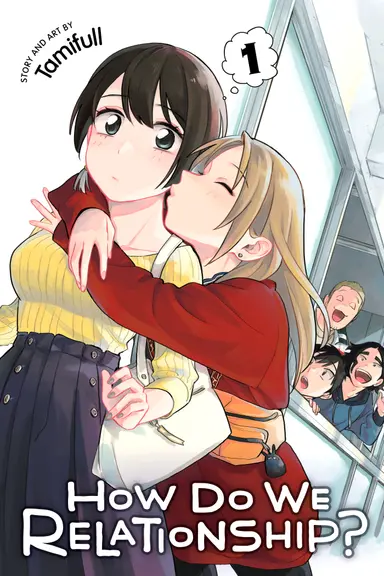
Tamifull's How Do We Relationship? is a campus romance between two college students. The story starts with its leads, Miwa and Saeko, deciding to date for (as the title suggests) fairly calculated reasons. For readers expecting the dramatic, winding road toward "happily ever after," this casualness may land as something close to a letdown.
For a story about two people who have been released from the closed social circles of high school but haven't yet taken on the responsibilities of adult life, there's hardly a better setting than a college campus. Suspended in that in-between time, Miwa and Saeko gradually work out what each of them actually wants. The structure lets "romance" double as a process of self-discovery.
It would be a mistake to be fooled by the cute art and the light, nimble tone. The heroines are rendered with such authenticity that their flaws and insecurities can sometimes be frustrating to watch unfold. And even that irritation tends to call back the days of youth, when how to face yourself, other people, and the world around you was still very much unsettled.
Pink Candy Kiss and Run Away With Me, Girl — The Choices Adults Make
If stories set in school years are about something that is about to begin, then yuri about working adults and married women starts from a different place: with characters already carrying what they've accumulated.

Ami Uozumi's Pink Candy Kiss follows the relationship between two working women in a quiet register. The fatigue of work and daily life, the difficulty of letting feelings show on your face. Within its refined paneling, a dull adult weight and ache hang in the air.
The contrast in its original title in Japanese, "cold and soft," likely points to the posture of keeping a professional distance and the softer interior beneath it. Little in the way of dramatic incident occurs, and in its absence the silences and pauses carry the meaning.


Battan's Run Away With Me, Girl takes on the premise of a married woman head-on. A character who holds a social standing through her work finds herself drawn to a married friend and the story takes on the fallout of that pull. The romance here isn't simply a sweet feeling; it's bound up, inseparably, with letting something go. The reader is placed in a position where it's hard to simply approve of or condemn the characters' decisions.
What these two share is a distinctive sense of pacing that refuses to rush toward an answer. They keep the explanation of feeling to a minimum and leave the judgment to the space between the lines. And the aftertaste is close to that particular state of being in love where you read too much into someone's feelings from a gesture as slight as their eyes drifting for a moment.
Beyond the Outline of Romance
The titles gathered here are only an introduction to a vast genre. From a student's first crush to a married woman's quiet crisis, the fact that a single label can hold this much range says something about how deep this particular rabbit hole goes.
You start reading for the romance, then realize somewhere along the way that the story has turned its gaze back on you. That route into the genre is probably one a fair number of readers will recognize.
About the Author
Kendog

A forty-something devotee of romance manga. Lately, he reads mostly yuri in pursuit of "the last uncharted territory of the heart-flutter."