

Soccer Manga for the World Cup Year: Stories of Underdogs
Sports

Kendog
The 2026 World Cup has come to a close. Co-hosted by three North American nations, this summer’s tournament will likely be remembered as the moment soccer became part of everyday conversation in America to a degree it never quite had before. MLS continues to grow in popularity, and European league matches are now a routine sight on sports bar TVs. Even so, soccer in America remains a developing sport compared to football or baseball.
Japan’s situation is, in some ways, similar. Since making its World Cup debut in 1998, Japanese soccer has grown to the point where it regularly sends players to Europe’s top leagues. But it has only been part of the national sporting fabric for about three decades.
What’s striking is that, within that short history, Japan has built up an unusual cultural asset: soccer manga. What follows is a look at works that could only have emerged from a soccer-latecomer nation—introduced here while the afterglow of the World Cup still lingers.
BLUE LOCK — A Survival Game in the Name of the Nation

BLUE LOCK, by Muneyuki Kaneshiro and Yusuke Nomura, rewrites the classic sports-manga formula of “friendship, effort, victory” with considerable nerve. To produce “the world’s most egoistic striker” capable of winning Japan a World Cup, 300 high school forwards are gathered in a facility and culled through a survival-format competition.
The premise evokes Squid Game more than Captain Tsubasa, and that’s exactly the point: the engine of the story is not the aesthetics of team sport but the logic of a death game. Anyone eliminated forfeits their shot at the national team forever. The only way to survive is to outmaneuver your own teammates. The “friendship” element of classic sports manga is replaced here by rivalry on the cut line, with selfishness reframed as the highest virtue.
What the cast unleashes in this extreme environment is a parade of superhuman finishing shots and idiosyncratic one-liners. Once you’ve picked a favorite character, half the fun is scanning real-life starting elevens for someone who fits the same archetype.

DAYS — One Mediocre Player Changes a Team of Elites

Tsuyoshi Yasuda’s DAYS sits at the opposite pole. The protagonist, Tsukushi Tsukamoto, has no competitive experience before enrolling at a soccer powerhouse high school. His athletic ability is unremarkable, and there’s no hint of innate talent. For readers expecting the acrobatic set pieces of Captain Tsubasa or BLUE LOCK, he is a strikingly thin presence at the center of the page.
The work’s distinct move is to view the struggles and growth of gifted players, on and off the pitch, through the eyes of a benchwarmer who barely registers in athletic terms.
Tsukushi never stops running, and his clumsy intensity gradually nudges his more talented teammates past their own ceilings. The accumulation of small moments, where one person quietly pushes another forward, gives the story the raw heat specific to high school sports. Team sports, it turns out, make an ideal stage for a coming-of-age ensemble drama about growth and mutual support.

GIANT KILLING — Tracing the Path to a Miracle From Outside the Pitch

GIANT KILLING, by Tsujitomo and Masaya Tsunamoto, shifts the very vantage point of soccer manga. The protagonist, Takeshi Tatsumi, is not a player but a newly appointed manager of a perennial bottom-table club in Japan’s pro league. Tatsumi once walked away from the team as a player, then resurfaced in the English lower divisions as an eccentric tactician famous for stringing together upset wins.
Before long, the reader is tracking the shifts in Tatsumi’s expression—arms folded on the bench, mind working to outflank the opposing club’s intentions—at least as closely as the action on the pitch, if not more. And it isn’t only players and managers. This title is structured as an ensemble drama in which the front office, the supporters, and the local press all rotate through as point-of-view characters. The obvious but easily forgotten fact that a professional soccer club is not made up of its players alone is illuminated from a different angle in every volume.
Through this accumulation of perspectives, the energy generated when people in vastly different roles come to share Tatsumi’s vision is amplified on the page itself. The dynamism that builds toward each miraculous “giant killing” is likely to thrill even readers with little prior interest in soccer.

Sayonara, Football and Farewell, My Dear Cramer — Soccer From Another Vantage Point
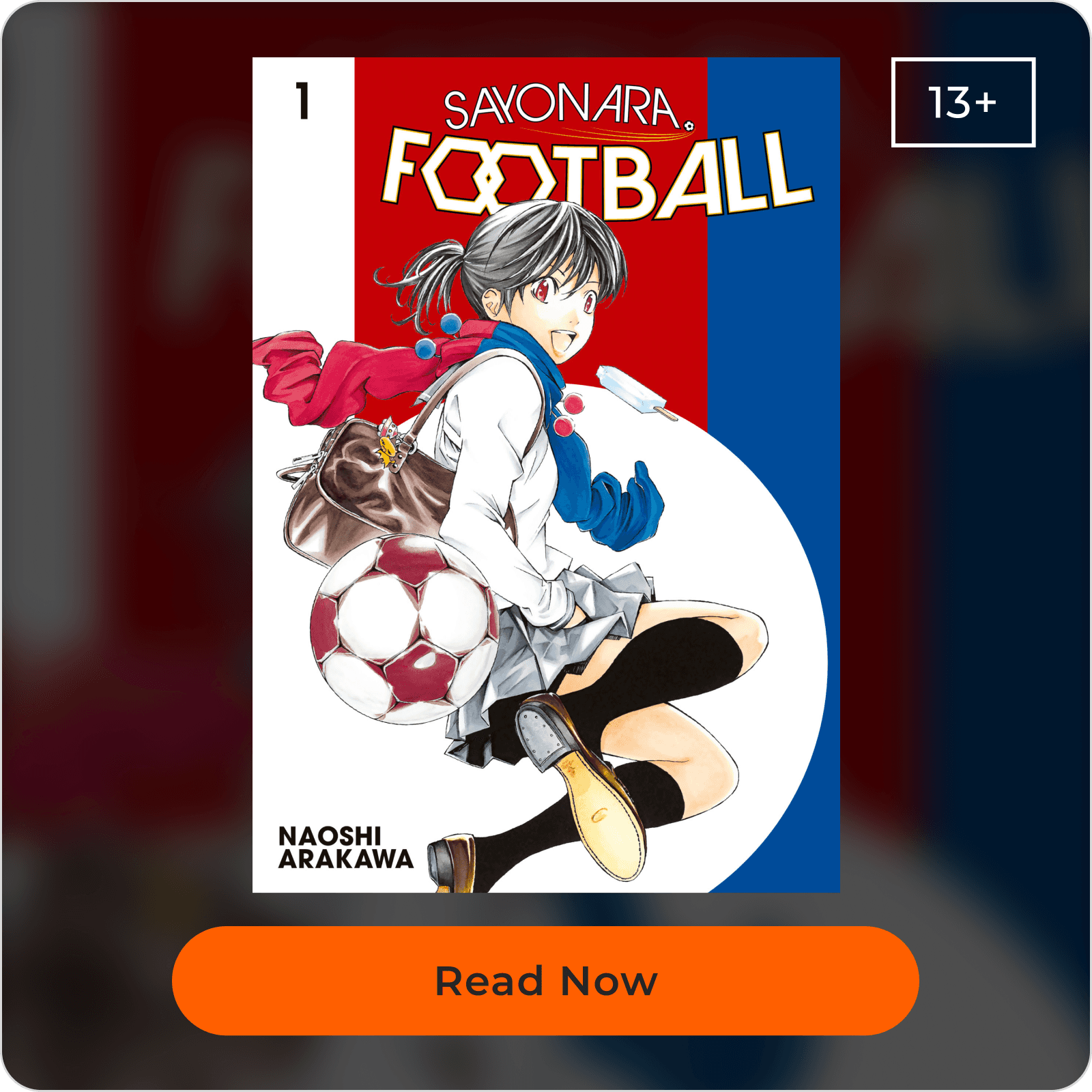
Naoshi Arakawa’s linked works Sayonara, Football and Farewell, My Dear Cramer stake out yet another position. The protagonist, Nozomi Onda, is technically the equal of any boy on her team. But due to physical-size differences, she is barred from taking the field in official matches. Before skill or passion can even enter the equation, an inborn condition stands in her way.
The narrative center here is neither a comeback from defeat nor a giant-killing run. It’s the question of where a character who has been outside the framework of the sport from the start can begin her own story.
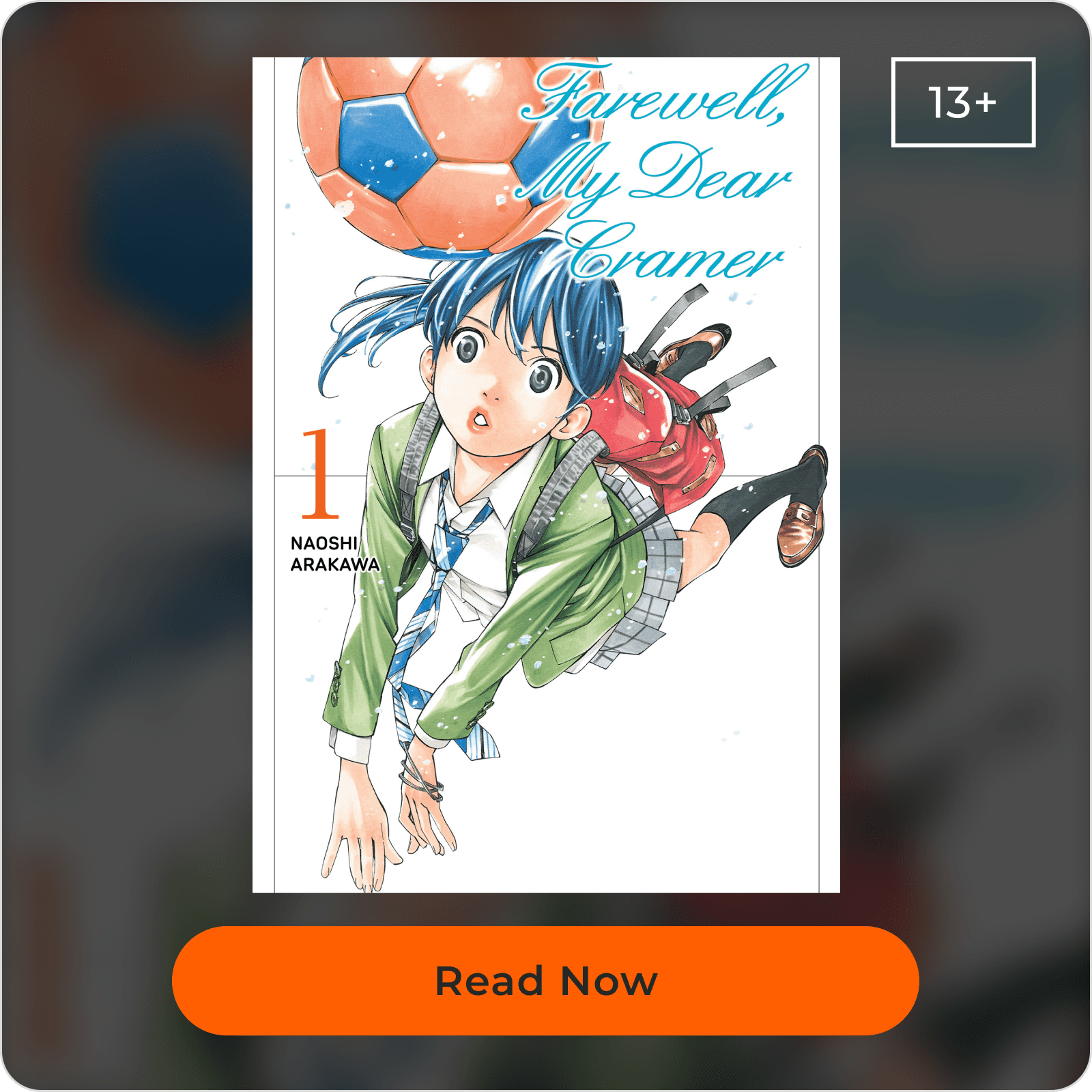
In the sequel, Farewell, My Dear Cramer, Nozomi joins the women’s soccer club at a local high school known for being weak, and meets teammates burning with their own love of the game. Phrased that way, it sounds like the start of a satisfying underdog run. But what becomes more visible, as these girls pour their passion into soccer, is the unfavorable environment surrounding them.
That gap is captured in a line from the club’s faculty advisor in Volume 1: “Is there any future in girls’ soccer?” By focusing equally on the girls’ devotion to the game and the barriers that limit their opportunities, Arakawa gives his clean, restrained artwork a sense of real-world weight.

International soccer's popularity is often said to ride on the presence of superstars like Messi and Ronaldo. That's partly true, and partly not.
Each of the manga discussed here contains a layer of perspective that differs from the world of celebrated star athletes. One character can't survive the selection process; another lacks talent; another is denied opportunity by her environment.
The World Cup shines as a stage once every four years partly because behind it stand countless stories of boys and girls who never became elites. The tournament is over, but the four-year road to the next one stretches ahead. As something to read along the way, these works should hold up for a good while.
About the Author
kendog

Staff writer at emaqi. As a soccer fan, he's mostly the type to catch European league results through highlight reels. Every World Cup year, though, something switches on, and he becomes the kind of person who will corner you with passionate opinions about the Japanese national team's performance.